
Its sole function is to instruct your cells to operate as they did in your youth. My protocol’s weekly total is 5 mg, in contrast to the standard 5 mg protocol of 10 to 15 mg, thus reducing your cycle costs by at least half. In the early stages — I administered it at elevated doses of 5 mg several times a week while optimizing my metabolism aggressively.
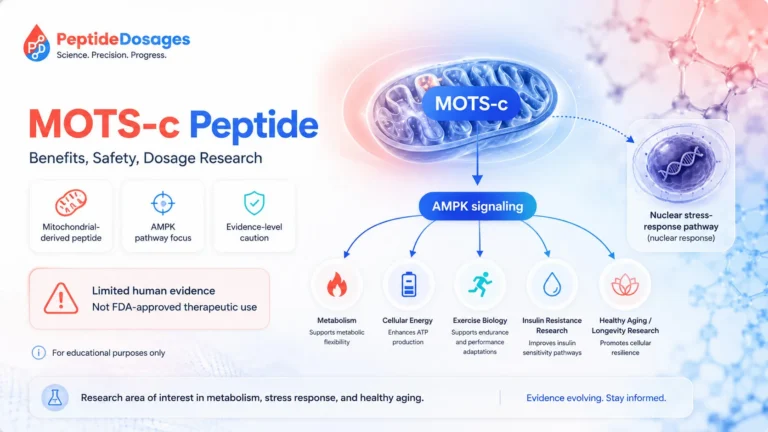
Learn the main types of peptides, from prescription medicines and skincare peptides to collagen supplements and experimental compounds, and how the evidence, regulation, and safety of each differ. MOTS-c is not currently an FDA-approved treatment for weight loss (fatigue), performance, metabolism, or healthy aging. Laboratory and animal studies suggest roles in metabolic signaling (AMPK activity), glucose regulation, stress adaptation, skeletal muscle biology, and exercise-related pathways.
Its concentration declines with age, and this decline correlates directly with the metabolic deterioration, loss of exercise capacity, and insulin resistance progression that characterize aging. MOTS-c circulates in the blood and has been detected in skeletal muscle, brain, heart, liver, and adipose tissue. In the world of bodybuilding and hormone replacement therapy, questions concerning the impact of testosterone on several facets of development are common. Somatropin , Synthetic human growth hormone (HGH,) is the most common prescription for growth hormone deficiencies in children and adults. Although MOTS-C shows promising benefits — its long-term safety is still being studied.
For MOTS-c (belly-fat claims are ahead of the evidence), and safety limits are still not well mapped 2, 7. A peptide can be biologically active and still lack patient-level data for a specific goal. MOTS-c may help researchers understand aging pathways (but it has not been shown to extend lifespan), slow aging, or improve healthspan in people 2, 6. That family is being studied because mitochondrial function changes with age — metabolic stress, and chronic disease risk 6. MOTS-c is often marketed online for weight loss or “belly fat,” but the evidence does not support that level of certainty.
Activation of AMPK
For researchers interested in exploring related topics, the complete guide to peptides provides background on peptide biology.

Research has demonstrated that administration improves glucose uptake in skeletal muscle, enhances fatty acid oxidation, and increases mitochondrial biogenesis in muscle tissue. Injection site reactions are the most commonly reported adverse events in animal research, typically mild and transient. Animal studies have shown minimal adverse effects at doses in the metabolically active range. Published animal research has used doses ranging from 0.1 to 5 mg/kg, with most studies falling in the 0.5 to 1 mg/kg range for metabolic and aging endpoints. Diabetes research has extensively examined the compound’s effects on glucose homeostasis — with consistent findings of improved insulin sensitivity and enhanced glucose uptake in skeletal muscle across preclinical models.
What potential dangers and uncertainties surround MOTS-c?
However (the absence of reported harm in mice is not the same as demonstrated safety in humans), especially over the long term or at supraphysiologic doses. The peptide occurs naturally in the body and is generally well tolerated in animal studies at the doses tested — with no dramatic toxicity reported in the short-term preclinical work published so far. Because MOTS-c is classified as a research peptide and is not an approved medication (there are no established human dosing guidelines), no standardized formulations, and no regulatory-sanctioned protocols.
By taking smaller, more frequent doses, the goal is to periodically activate the AMPK-related signal without overwhelming the body with a large quantity at once. Should weight loss be your main objective — a different, more evidence-based approach might be suggested by a physician. Providers utilize MOTS-c as a supplementary aid to a diet that is appropriate for caloric intake and regular exercise, rather than as a solitary solution for weight loss.
MOTS-c, a small molecular active peptide, has been indicated to have potential uses in aging, insulin resistance, cardiovascular diseases, and inflammation (Figure 1). It is characterized as a “motion simulator” that regulates glucose metabolism in the body and influences muscle insulin functionality (15). Research is accumulating evidence of a strong correlation between MDP and the aforementioned factors — with MDP enhancing the pathological response to cardiovascular diseases (CVD) via various mechanisms (18, 24). This effect may be linked to the specific regulation of tissue differentiation. Furthermore (in contrast to animal studies), the elderly exhibit the highest levels of MOTS-c in their skeletal muscle, suggesting a gradual decrease of MOTS-c in plasma and muscle as age progresses (30). Indeed — MOTS-c levels diminish in both skeletal muscle and blood circulation in humans and mice as they age.

No human studies have evaluated any of these dosages. Changes in health are indicative of all individuals, including those using multiple compounds. Exercise led to an 11.9-fold increase in MOTS-c levels in the skeletal muscle of humans. Chronic exercise resulted in a 1.5- to 5-fold increase in MOTS-c protein expression within muscle tissue — highlighting both immediate and ongoing enhancing effects of exercise. Begin with conservative doses of 5-10 mg and monitor closely. These are research protocols that are frequently discussed and provided for educational purposes.
Reduced appetite and unexpected weight loss constitute another category of frequently observed side effects. Identical doses of MOTS-c can lead to entirely different side effect experiences between two researchers. Non-peptide substances may amplify the effects of MOTS-c through associated mechanisms. MOTS-c can be utilized alongside other peptides or compounds to tackle multiple objectives at once or to enhance specific results.
Summary of Before and After Outcomes for MOTS-c
Users commonly report that endurance work feels easier at the same intensity, and that strength endurance (total work capacity across sets) improves. This effect may compound over multiple cycles if training is maintained during off periods, as the mitochondrial adaptations persist even after MOTS-c is discontinued. This shows up as better endurance (faster recovery between training sessions), and more stable daily energy levels. This is one of many reasons that resistance training and cardiovascular exercise remain the foundation of healthy aging — with or without peptide support. While most users research MOTS-c before and after reports for fat loss and energy results, the peptide’s mechanisms affect several areas of health beyond body composition. A standard MOTS-c cycle follows a ramp-up, maintain, and taper structure to mimic physiological pulsing and reduce tolerance development.
In the realm of longevity, MOTS-c is conceptually closest to NAD+ therapy, as both target mitochondrial function and cellular energy, albeit through different pathways. BPC-157 is investigated for its tissue repair capabilities — such as for the gut lining (tendons), and ligaments — rather than metabolism; these serve distinct purposes and are not interchangeable. Given that MOTS-c affects glucose metabolism, it is reasonable to consider its effects on blood sugar, particularly for individuals with diabetes, prediabetes, or those taking glucose-lowering medications. The side effects documented in existing research and clinical applications are typically mild, with the most common being injection-site reactions like redness, itching, or discomfort. It is not an authorized medication, dosages have not been established in human trials, and the online protocols are extrapolations instead of established clinical standards.